
Selling Austria: When Tourism Becomes Cultural Diplomacy
Austria is using tourism, business and international networks to present its culture abroad
September 02nd, 2026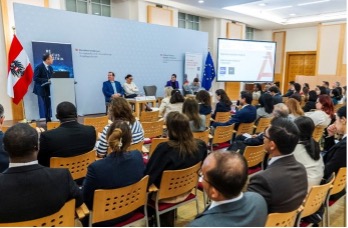
Tourism can be more than an economic activity: it can also shape how a country is experienced and understood abroad. This was the focus of “Business Meets Diplomacy: Austria as a Tourism Destination – A Lifestyle Made in Austria”, held at the Diplomatic Academy of Vienna on 7 May 2026. Organised by the Austrian Foreign Ministry's Business Service, the event brought together around 60 diplomats with representatives from tourism, business, research and education to present Austria as a modern and culturally diverse destination. Austria recorded 157 million overnight stays and around €30 billion in added value from tourism, making the sector an important part of the country's international presence.
During the event, Austrian officials stressed that tourism is closely connected to encounters between people. Tanja Gruber of the Austrian National Tourist Office presented Austria's international tourism network, which includes 19 offices around the world, and described the country's tourism image as being built not only around traditional attractions but also around authenticity, experiences and a modern Austrian lifestyle. The approach includes campaigns such as “Non-Disclosure Austria”, which use storytelling to present less familiar aspects of the country.
A particularly visible example came through ReFocus Austria, a joint initiative of the Austrian National Tourist Office and the Federal Ministry for European and International Affairs. During the Eurovision Song Contest, the two organisations used an international audience of around 160 million viewers to present Austria as open-minded, cosmopolitan and culturally diverse. The example shows how tourism promotion can overlap with broader efforts to shape a country's international image.
Education was also part of the discussion. Austria's tourism sector works with specialised schools, universities and universities of applied sciences, with intercultural communication, sustainability and international cooperation becoming increasingly important areas of study. Research partnerships, joint curriculum development and student exchanges connect tourism education with international exchange and create another channel through which people from different countries can meet and learn from one another.
The event offered a clear example of cultural diplomacy working alongside business. Tourism allows a country to communicate its history, lifestyle and values through direct experiences, while diplomats, companies, universities and cultural institutions help create the networks behind those experiences. Austria's approach suggests that promoting a country abroad is not only about attracting visitors or investment; it can also be about creating opportunities for people to encounter another culture and building relationships that extend beyond traditional diplomacy.
