European History in the Evolving World Order
History, Diplomacy and Dialogue in a Changing International Order
October 26th, 2026
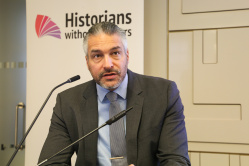
Welcoming Remarks by Mark Donfried
Institute of Historical Research, University of London
October 26th, 2026
Good morning, distinguished colleagues, good morning to all,
It is a great pleasure to see you all here today for this seminar, which addresses a subject of considerable importance and particular relevance to the challenges facing Europe and the wider international community.
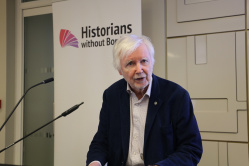
I would like to express my particular appreciation to Dr Erkki Tuomioja, our colleagues at Historians without Borders Finland and the Institute of Historical Research for their cooperation and to our distinguished speakers and participants joining us here in London and online.
Our subject today raises an important question: How can European historical experience contribute to our understanding of the evolving international order?
From the perspective of cultural diplomacy, this question extends beyond the interpretation of historical events. It concerns the relationship between historical knowledge, cultural identity, institutional development and international cooperation.
European history has profoundly influenced the formation of the modern international system. The development of diplomacy, concepts of sovereignty, international law and the balance of power, as well as the experience of two World Wars, the Cold War and European integration, have shaped institutions and political relationships far beyond the continent itself.
Yet history is not simply a record of past events. It is also a form of accumulated knowledge, an intellectual and institutional inheritance through which societies understand their achievements, recognise their failures and consider their future.
A traditional German proverb captures this relationship rather well: “Ein neuer Besen kehrt gut, aber die alte Bürste kennt die Ecken” — a new broom sweeps well, but the old brush knows the corners.
It reminds us that renewal and progress are essential, but that accumulated historical experience can reveal complexities that might otherwise be overlooked.
European history also demonstrates that diplomacy itself can profoundly influence the course of events.
Only three days ago, we marked the 86th anniversary of the meeting between Hitler and Franco at Hendaye in October 1940. Despite Germany's military dominance, the negotiations failed to secure Spain's participation in the war, with important consequences for Gibraltar, North Africa and the Mediterranean.
This episode illustrates how diplomatic decisions, including failed negotiations, can influence the course of conflicts and the future of nations.
If military historians devote generations to understanding why battles were won or lost, historians of diplomacy should devote equal attention to understanding why negotiations succeeded or failed.
This historical perspective is particularly relevant today, as established international relationships are reconsidered, geopolitical competition intensifies and the institutions of international cooperation face renewed challenges.
Europe's experience also provides important examples of reconciliation. Franco-German relations after 1945, the transformations of 1989 and the development of European integration demonstrate that historical antagonisms need not determine future political relationships.
This is where cultural diplomacy has a particular contribution to make.
International relations are shaped not only by political and economic interests, but also by collective memory, cultural identity and the ways in which societies interpret their own histories and those of others.
Cultural diplomacy provides opportunities for different historical experiences to be examined and discussed across national and cultural boundaries. It recognises that understanding another society's historical perspective does not necessarily require agreement with it.
In this respect, historians and practitioners of cultural diplomacy have complementary responsibilities. Historians provide the scholarly methods through which the past can be critically understood; cultural diplomacy can help bring that understanding into wider international dialogue.
Let me conclude with one observation.
The significance of European history for the evolving world order lies not only in the institutions and ideas Europe has contributed, but also in the accumulated experience of conflict, cooperation, failure and reconciliation from which the international community can continue to learn.
Our responsibility is not merely to preserve that experience, but to examine it critically, share it across cultural and national boundaries, and consider its relevance to the challenges of our time.
Thank you very much. I wish us all a stimulating and productive seminar.