
China–Africa Forum Strengthens People-to-People Exchange
UNESCO supports exchange through sport, arts and education
September 10th, 2026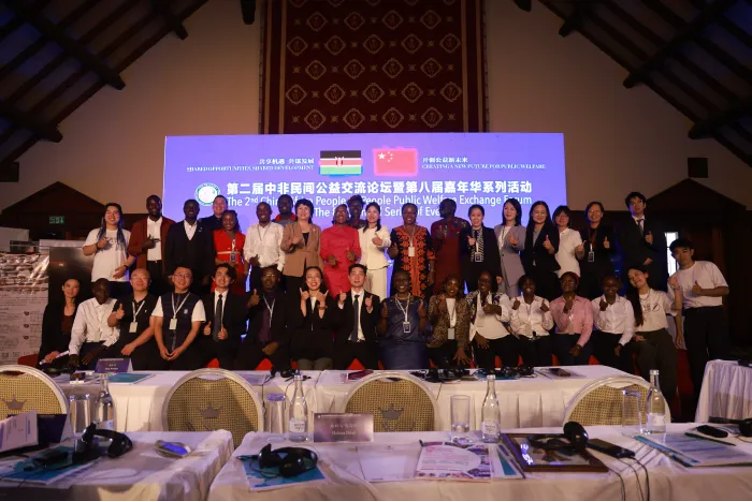
UNESCO took part in the second China–Africa People-to-People Public Welfare Exchange Forum and the eighth Dream Building Service Association (DBSA) Carnival in Nairobi, Kenya, in August 2026. The programme brought together public institutions, civil society, international organisations, youth actors and local communities, combining high-level discussion with community activities focused on dialogue, cooperation and inclusive youth development.
A central part of UNESCO’s participation was the High-Level Dialogue on “Empowering Youth for a Shared Future”, held on 7 August. John Linus, Chairperson of the UNESCO Youth Forum, represented the organisation alongside government officials, diplomats, civil society and NGO leaders, international organisations and media representatives. Discussions focused on meaningful youth engagement, trust-building, innovative volunteerism, intercultural dialogue and intergenerational collaboration, with particular attention to involving young people throughout the development of programmes and policies.
The policy discussions were linked directly with the DBSA Carnival in Mathare, where sport, arts, education and creativity provided opportunities for community participation. Activities included the Slum World Cup, Talent Show, Art Festival and Africa Dream Campus Reading Corner. The football programme brought together 42 community teams and more than 500 young players, while the arts programme encouraged young participants to express their ideas through music, performance and visual creativity.
These activities demonstrated how cultural and educational participation can complement institutional dialogue. The “Born to Shine” Art Festival involved 289 students from 15 community schools and produced more than 300 artworks centred on hope and resilience. Education initiatives also reached 13 partner community schools through a digital management upgrade, including nearly 1,000 newly catalogued books. By connecting policymakers with locally rooted programmes, UNESCO’s participation placed people-to-people exchange alongside broader international cooperation.
The combination of diplomatic discussion and community engagement gave the China–Africa exchange a practical cultural dimension. Rather than separating international dialogue from local participation, the programme connected institutional cooperation with sport, education and artistic expression. In this way, it reflected a people-to-people approach to cultural diplomacy in which young participants contribute directly to exchanges intended to strengthen understanding, inclusion and longer-term cooperation.
